This guide turns the topic into verifiable decisions, concrete controls, and deployment criteria.
Why the topic matters — architecture
Why the topic matters should be applied to the specific case “Fact check — Cybersecurity: architecture.” Agentic security must cover the model, tools, memory, identities, network, and available actions. OWASP 2026 material and NIST work on CSF 2.0 and Cyber AI show AI governance and cybersecurity operations converging around capability control and evidence. Start by turning the topic into an observable decision unit: need, required data, expected outcome, responsible owner, and stop condition. This decomposition prevents teams from confusing technical capability with business authorization or regulatory evidence.
For “Fact check — Cybersecurity: architecture,” write invariants before choosing tooling. Define allowed and prohibited data, identities, retention, network boundaries, and irreversible operations. A strong control can be tested independently of a vendor, so it survives a model, API, or interface change instead of being tied to one implementation.
Validation should cover normal and degraded cases. Test ambiguous input, missing information, conflicting sources, a bypass attempt, an external dependency failure, and a partially correct output. Give every scenario an expected result: success, safe refusal, escalation, or request for more information. This produces operating evidence instead of a demo.
Deployment of “Fact check — Cybersecurity: architecture” should remain reversible. Introduce a new version to a limited scope, keep comparable traces and stable criteria, and prepare rollback before expansion. Classify incidents by consequence: false information, unauthorized action, data leakage, outage, or impact on a person. Human review should increase with potential impact.

Evidence baseline — architecture
Evidence baseline should be applied to the specific case “Fact check — Cybersecurity: architecture.” Agentic security must cover the model, tools, memory, identities, network, and available actions. OWASP 2026 material and NIST work on CSF 2.0 and Cyber AI show AI governance and cybersecurity operations converging around capability control and evidence. Start by turning the topic into an observable decision unit: need, required data, expected outcome, responsible owner, and stop condition. This decomposition prevents teams from confusing technical capability with business authorization or regulatory evidence.
For “Fact check — Cybersecurity: architecture,” write invariants before choosing tooling. Define allowed and prohibited data, identities, retention, network boundaries, and irreversible operations. A strong control can be tested independently of a vendor, so it survives a model, API, or interface change instead of being tied to one implementation.
Validation should cover normal and degraded cases. Test ambiguous input, missing information, conflicting sources, a bypass attempt, an external dependency failure, and a partially correct output. Give every scenario an expected result: success, safe refusal, escalation, or request for more information. This produces operating evidence instead of a demo.
Deployment of “Fact check — Cybersecurity: architecture” should remain reversible. Introduce a new version to a limited scope, keep comparable traces and stable criteria, and prepare rollback before expansion. Classify incidents by consequence: false information, unauthorized action, data leakage, outage, or impact on a person. Human review should increase with potential impact.
Architecture and mechanism — architecture
Architecture and mechanism should be applied to the specific case “Fact check — Cybersecurity: architecture.” Agentic security must cover the model, tools, memory, identities, network, and available actions. OWASP 2026 material and NIST work on CSF 2.0 and Cyber AI show AI governance and cybersecurity operations converging around capability control and evidence. Start by turning the topic into an observable decision unit: need, required data, expected outcome, responsible owner, and stop condition. This decomposition prevents teams from confusing technical capability with business authorization or regulatory evidence.
For “Fact check — Cybersecurity: architecture,” write invariants before choosing tooling. Define allowed and prohibited data, identities, retention, network boundaries, and irreversible operations. A strong control can be tested independently of a vendor, so it survives a model, API, or interface change instead of being tied to one implementation.
Validation should cover normal and degraded cases. Test ambiguous input, missing information, conflicting sources, a bypass attempt, an external dependency failure, and a partially correct output. Give every scenario an expected result: success, safe refusal, escalation, or request for more information. This produces operating evidence instead of a demo.
Deployment of “Fact check — Cybersecurity: architecture” should remain reversible. Introduce a new version to a limited scope, keep comparable traces and stable criteria, and prepare rollback before expansion. Classify incidents by consequence: false information, unauthorized action, data leakage, outage, or impact on a person. Human review should increase with potential impact.
Data and boundaries — architecture
Data and boundaries should be applied to the specific case “Fact check — Cybersecurity: architecture.” Agentic security must cover the model, tools, memory, identities, network, and available actions. OWASP 2026 material and NIST work on CSF 2.0 and Cyber AI show AI governance and cybersecurity operations converging around capability control and evidence. Start by turning the topic into an observable decision unit: need, required data, expected outcome, responsible owner, and stop condition. This decomposition prevents teams from confusing technical capability with business authorization or regulatory evidence.
For “Fact check — Cybersecurity: architecture,” write invariants before choosing tooling. Define allowed and prohibited data, identities, retention, network boundaries, and irreversible operations. A strong control can be tested independently of a vendor, so it survives a model, API, or interface change instead of being tied to one implementation.
Validation should cover normal and degraded cases. Test ambiguous input, missing information, conflicting sources, a bypass attempt, an external dependency failure, and a partially correct output. Give every scenario an expected result: success, safe refusal, escalation, or request for more information. This produces operating evidence instead of a demo.
Deployment of “Fact check — Cybersecurity: architecture” should remain reversible. Introduce a new version to a limited scope, keep comparable traces and stable criteria, and prepare rollback before expansion. Classify incidents by consequence: false information, unauthorized action, data leakage, outage, or impact on a person. Human review should increase with potential impact.
Operational controls — architecture
Operational controls should be applied to the specific case “Fact check — Cybersecurity: architecture.” Agentic security must cover the model, tools, memory, identities, network, and available actions. OWASP 2026 material and NIST work on CSF 2.0 and Cyber AI show AI governance and cybersecurity operations converging around capability control and evidence. Start by turning the topic into an observable decision unit: need, required data, expected outcome, responsible owner, and stop condition. This decomposition prevents teams from confusing technical capability with business authorization or regulatory evidence.
For “Fact check — Cybersecurity: architecture,” write invariants before choosing tooling. Define allowed and prohibited data, identities, retention, network boundaries, and irreversible operations. A strong control can be tested independently of a vendor, so it survives a model, API, or interface change instead of being tied to one implementation.
Validation should cover normal and degraded cases. Test ambiguous input, missing information, conflicting sources, a bypass attempt, an external dependency failure, and a partially correct output. Give every scenario an expected result: success, safe refusal, escalation, or request for more information. This produces operating evidence instead of a demo.
Deployment of “Fact check — Cybersecurity: architecture” should remain reversible. Introduce a new version to a limited scope, keep comparable traces and stable criteria, and prepare rollback before expansion. Classify incidents by consequence: false information, unauthorized action, data leakage, outage, or impact on a person. Human review should increase with potential impact.
Validation and verification — architecture
Validation and verification should be applied to the specific case “Fact check — Cybersecurity: architecture.” Agentic security must cover the model, tools, memory, identities, network, and available actions. OWASP 2026 material and NIST work on CSF 2.0 and Cyber AI show AI governance and cybersecurity operations converging around capability control and evidence. Start by turning the topic into an observable decision unit: need, required data, expected outcome, responsible owner, and stop condition. This decomposition prevents teams from confusing technical capability with business authorization or regulatory evidence.
For “Fact check — Cybersecurity: architecture,” write invariants before choosing tooling. Define allowed and prohibited data, identities, retention, network boundaries, and irreversible operations. A strong control can be tested independently of a vendor, so it survives a model, API, or interface change instead of being tied to one implementation.
Validation should cover normal and degraded cases. Test ambiguous input, missing information, conflicting sources, a bypass attempt, an external dependency failure, and a partially correct output. Give every scenario an expected result: success, safe refusal, escalation, or request for more information. This produces operating evidence instead of a demo.
Deployment of “Fact check — Cybersecurity: architecture” should remain reversible. Introduce a new version to a limited scope, keep comparable traces and stable criteria, and prepare rollback before expansion. Classify incidents by consequence: false information, unauthorized action, data leakage, outage, or impact on a person. Human review should increase with potential impact.
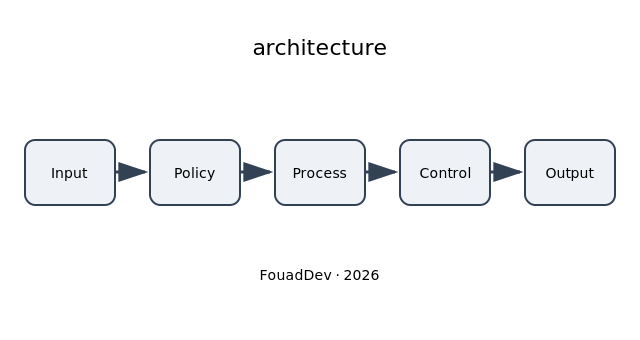
Risks and failure modes — architecture
Risks and failure modes should be applied to the specific case “Fact check — Cybersecurity: architecture.” Agentic security must cover the model, tools, memory, identities, network, and available actions. OWASP 2026 material and NIST work on CSF 2.0 and Cyber AI show AI governance and cybersecurity operations converging around capability control and evidence. Start by turning the topic into an observable decision unit: need, required data, expected outcome, responsible owner, and stop condition. This decomposition prevents teams from confusing technical capability with business authorization or regulatory evidence.
For “Fact check — Cybersecurity: architecture,” write invariants before choosing tooling. Define allowed and prohibited data, identities, retention, network boundaries, and irreversible operations. A strong control can be tested independently of a vendor, so it survives a model, API, or interface change instead of being tied to one implementation.
Validation should cover normal and degraded cases. Test ambiguous input, missing information, conflicting sources, a bypass attempt, an external dependency failure, and a partially correct output. Give every scenario an expected result: success, safe refusal, escalation, or request for more information. This produces operating evidence instead of a demo.
Deployment of “Fact check — Cybersecurity: architecture” should remain reversible. Introduce a new version to a limited scope, keep comparable traces and stable criteria, and prepare rollback before expansion. Classify incidents by consequence: false information, unauthorized action, data leakage, outage, or impact on a person. Human review should increase with potential impact.
Design trade-offs — architecture
Design trade-offs should be applied to the specific case “Fact check — Cybersecurity: architecture.” Agentic security must cover the model, tools, memory, identities, network, and available actions. OWASP 2026 material and NIST work on CSF 2.0 and Cyber AI show AI governance and cybersecurity operations converging around capability control and evidence. Start by turning the topic into an observable decision unit: need, required data, expected outcome, responsible owner, and stop condition. This decomposition prevents teams from confusing technical capability with business authorization or regulatory evidence.
For “Fact check — Cybersecurity: architecture,” write invariants before choosing tooling. Define allowed and prohibited data, identities, retention, network boundaries, and irreversible operations. A strong control can be tested independently of a vendor, so it survives a model, API, or interface change instead of being tied to one implementation.
Validation should cover normal and degraded cases. Test ambiguous input, missing information, conflicting sources, a bypass attempt, an external dependency failure, and a partially correct output. Give every scenario an expected result: success, safe refusal, escalation, or request for more information. This produces operating evidence instead of a demo.
Deployment of “Fact check — Cybersecurity: architecture” should remain reversible. Introduce a new version to a limited scope, keep comparable traces and stable criteria, and prepare rollback before expansion. Classify incidents by consequence: false information, unauthorized action, data leakage, outage, or impact on a person. Human review should increase with potential impact.
Production rollout — architecture
Production rollout should be applied to the specific case “Fact check — Cybersecurity: architecture.” Agentic security must cover the model, tools, memory, identities, network, and available actions. OWASP 2026 material and NIST work on CSF 2.0 and Cyber AI show AI governance and cybersecurity operations converging around capability control and evidence. Start by turning the topic into an observable decision unit: need, required data, expected outcome, responsible owner, and stop condition. This decomposition prevents teams from confusing technical capability with business authorization or regulatory evidence.
For “Fact check — Cybersecurity: architecture,” write invariants before choosing tooling. Define allowed and prohibited data, identities, retention, network boundaries, and irreversible operations. A strong control can be tested independently of a vendor, so it survives a model, API, or interface change instead of being tied to one implementation.
Validation should cover normal and degraded cases. Test ambiguous input, missing information, conflicting sources, a bypass attempt, an external dependency failure, and a partially correct output. Give every scenario an expected result: success, safe refusal, escalation, or request for more information. This produces operating evidence instead of a demo.
Deployment of “Fact check — Cybersecurity: architecture” should remain reversible. Introduce a new version to a limited scope, keep comparable traces and stable criteria, and prepare rollback before expansion. Classify incidents by consequence: false information, unauthorized action, data leakage, outage, or impact on a person. Human review should increase with potential impact.
Checklist and decisions — architecture
Checklist and decisions should be applied to the specific case “Fact check — Cybersecurity: architecture.” Agentic security must cover the model, tools, memory, identities, network, and available actions. OWASP 2026 material and NIST work on CSF 2.0 and Cyber AI show AI governance and cybersecurity operations converging around capability control and evidence. Start by turning the topic into an observable decision unit: need, required data, expected outcome, responsible owner, and stop condition. This decomposition prevents teams from confusing technical capability with business authorization or regulatory evidence.
For “Fact check — Cybersecurity: architecture,” write invariants before choosing tooling. Define allowed and prohibited data, identities, retention, network boundaries, and irreversible operations. A strong control can be tested independently of a vendor, so it survives a model, API, or interface change instead of being tied to one implementation.
Validation should cover normal and degraded cases. Test ambiguous input, missing information, conflicting sources, a bypass attempt, an external dependency failure, and a partially correct output. Give every scenario an expected result: success, safe refusal, escalation, or request for more information. This produces operating evidence instead of a demo.
Deployment of “Fact check — Cybersecurity: architecture” should remain reversible. Introduce a new version to a limited scope, keep comparable traces and stable criteria, and prepare rollback before expansion. Classify incidents by consequence: false information, unauthorized action, data leakage, outage, or impact on a person. Human review should increase with potential impact.
Sources used
- NIST — Cybersecurity Framework [S1]
- NIST — SP 1353 AI for CSF analysis [S2]
- NIST — AI for CSF public comment [S3]
- NIST — Cyber AI Profile workshop [S4]
- NIST — SSDF 1.1 [S5]
- NIST — SSDF 1.2 draft [S6]
- OWASP — Agentic Applications Top 10 2026 [S7]
- OWASP — GenAI LLM Top 10 2026 [S8]
- GitHub Docs — cloud agent risks [S9]
- CISA — Secure by Demand Guide [S10]



Comments
No published comment yet.
Sign in to comment