A systems view of hydropower exposure after the August 2026 disaster: intakes, tunnels, access roads, workers, grid dependencies, shutdown logic, sediment and portfolio resilience.
Factual update point: 30 August 2026. Casualty and rescue figures were still evolving; time-sensitive numbers must be read with their date and source.
Reader question: Assess hydropower risk as a coupled system rather than as damage to isolated plants. Promised outcome: Identify design, operations and portfolio controls that reduce cascading loss from future mountain hazards.
Start with the hazard chain, not the plant boundary
The initiating process occurred far upstream of individual plant fences: glacier and rock collapse, rapid debris transport, flooding and secondary barrier-lake hazards. In the context of “Start with the hazard chain, not the plant boundary”, the point matters only when it changes an operating decision. To assess hydropower risk as a coupled system rather than as damage to isolated plants., a team should identify the observable signal, who receives it, how quickly action must follow and what evidence will show that the control actually worked. A procedure that cannot be exercised under degraded access, power or communications should not be treated as proven readiness. The practical outcome remains: Identify design, operations and portfolio controls that reduce cascading loss from future mountain hazards.
A plant-level flood register misses upstream mass movements that determine whether the facility receives a conventional high flow or a dense debris surge. This is a control problem as much as a descriptive one. For “Start with the hazard chain, not the plant boundary”, keep the source, date, uncertainty and mechanism that connects the observation to service loss or human exposure. Then test the decision against a plausible failure of another dependency. This prevents a plan from working only in the ideal conditions that disappear during a mountain disaster. The reader job is to assess hydropower risk as a coupled system rather than as damage to isolated plants., and the result should be measurable against this outcome: Identify design, operations and portfolio controls that reduce cascading loss from future mountain hazards.
Emergency plans therefore need catchment-scale scenarios and must remain active after the visible first peak while upstream geometry keeps changing. The operational implication is to connect evidence, trigger and ownership instead of adding another generic checklist. In “Start with the hazard chain, not the plant boundary”, every important assumption should be visible, every threshold should have a rationale, and every failed exercise should create a specific corrective action. The review should also ask who becomes least protected when access or communications fail. That discipline supports the task to assess hydropower risk as a coupled system rather than as damage to isolated plants. and leads toward the intended outcome: Identify design, operations and portfolio controls that reduce cascading loss from future mountain hazards.

Opened and read evidence: S1 · Reuters · S4 · Reuters · S8 · World Bank
A hydropower scheme fails through many components
Intakes, desanders, gates, tunnels, penstocks, powerhouses, substations, transmission, roads and communications all have different failure modes. A defensible decision then asks three questions: what is known, what could still change, and which action remains safe if the uncertainty resolves badly? “A hydropower scheme fails through many components” should be revisited after material new evidence or terrain change. During the emergency, reversible precautions are often preferable; irreversible reconstruction or investment choices deserve a stronger evidence threshold. That approach serves the reader need to assess hydropower risk as a coupled system rather than as damage to isolated plants. and aims to identify design, operations and portfolio controls that reduce cascading loss from future mountain hazards.
Fine sediment erodes equipment, coarse debris blocks intakes, boulders damage civil works and slope failures cut portals or access. In the context of “A hydropower scheme fails through many components”, the point matters only when it changes an operating decision. To assess hydropower risk as a coupled system rather than as damage to isolated plants., a team should identify the observable signal, who receives it, how quickly action must follow and what evidence will show that the control actually worked. A procedure that cannot be exercised under degraded access, power or communications should not be treated as proven readiness. The practical outcome remains: Identify design, operations and portfolio controls that reduce cascading loss from future mountain hazards.
The better engineering question is which component failure removes safe generation, access or worker survival rather than whether the powerhouse wall survived. This is a control problem as much as a descriptive one. For “A hydropower scheme fails through many components”, keep the source, date, uncertainty and mechanism that connects the observation to service loss or human exposure. Then test the decision against a plausible failure of another dependency. This prevents a plan from working only in the ideal conditions that disappear during a mountain disaster. The reader job is to assess hydropower risk as a coupled system rather than as damage to isolated plants., and the result should be measurable against this outcome: Identify design, operations and portfolio controls that reduce cascading loss from future mountain hazards.

Opened and read evidence: S2 · Reuters · S5 · Reuters · S9 · World Bank
Tunnel safety belongs in disaster management
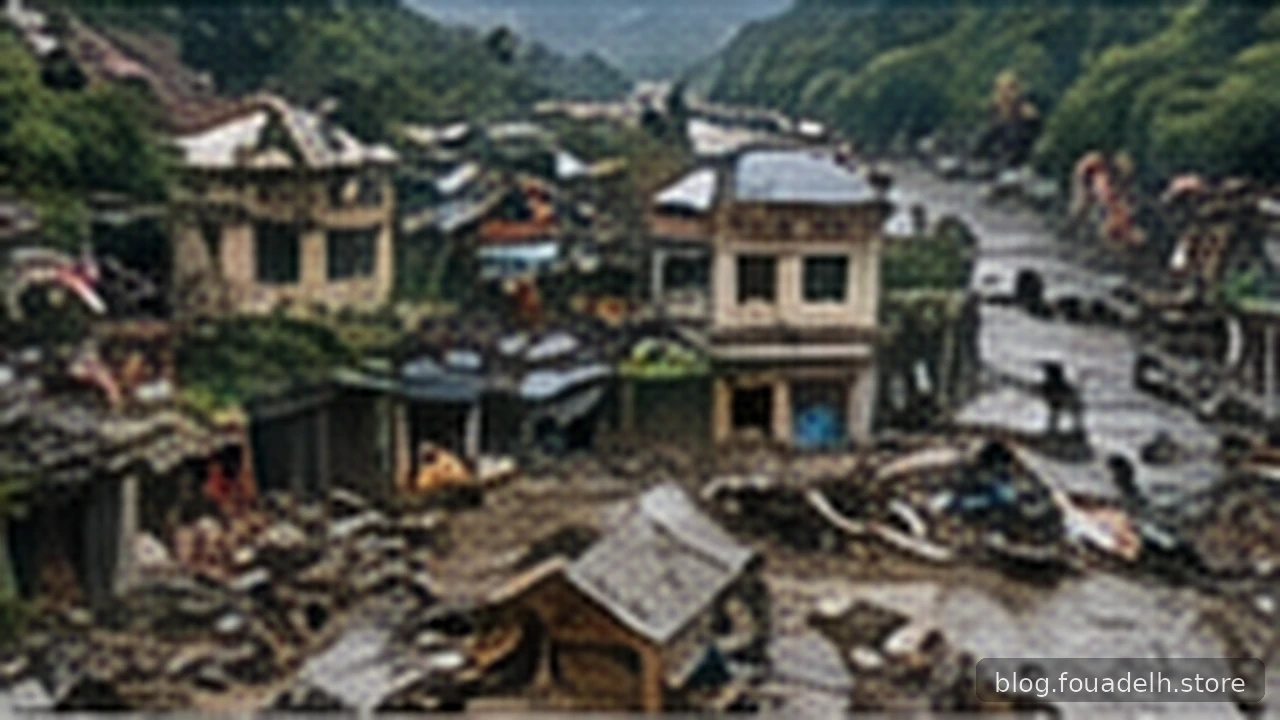
Reports that workers might be trapped in damaged hydropower tunnels turned an infrastructure event into a specialist rescue problem. The operational implication is to connect evidence, trigger and ownership instead of adding another generic checklist. In “Tunnel safety belongs in disaster management”, every important assumption should be visible, every threshold should have a rationale, and every failed exercise should create a specific corrective action. The review should also ask who becomes least protected when access or communications fail. That discipline supports the task to assess hydropower risk as a coupled system rather than as damage to isolated plants. and leads toward the intended outcome: Identify design, operations and portfolio controls that reduce cascading loss from future mountain hazards.
Underground spaces can lose access, ventilation, power and communication at the same time while external flooding blocks portals. A defensible decision then asks three questions: what is known, what could still change, and which action remains safe if the uncertainty resolves badly? “Tunnel safety belongs in disaster management” should be revisited after material new evidence or terrain change. During the emergency, reversible precautions are often preferable; irreversible reconstruction or investment choices deserve a stronger evidence threshold. That approach serves the reader need to assess hydropower risk as a coupled system rather than as damage to isolated plants. and aims to identify design, operations and portfolio controls that reduce cascading loss from future mountain hazards.
Operators need current tunnel drawings, personnel accounting, refuge arrangements and pre-agreed interfaces with specialist rescue agencies. In the context of “Tunnel safety belongs in disaster management”, the point matters only when it changes an operating decision. To assess hydropower risk as a coupled system rather than as damage to isolated plants., a team should identify the observable signal, who receives it, how quickly action must follow and what evidence will show that the control actually worked. A procedure that cannot be exercised under degraded access, power or communications should not be treated as proven readiness. The practical outcome remains: Identify design, operations and portfolio controls that reduce cascading loss from future mountain hazards.
Opened and read evidence: S3 · Reuters · S6 · Reuters · S10 · World Bank Blogs
Debris and sediment create long-tail risk
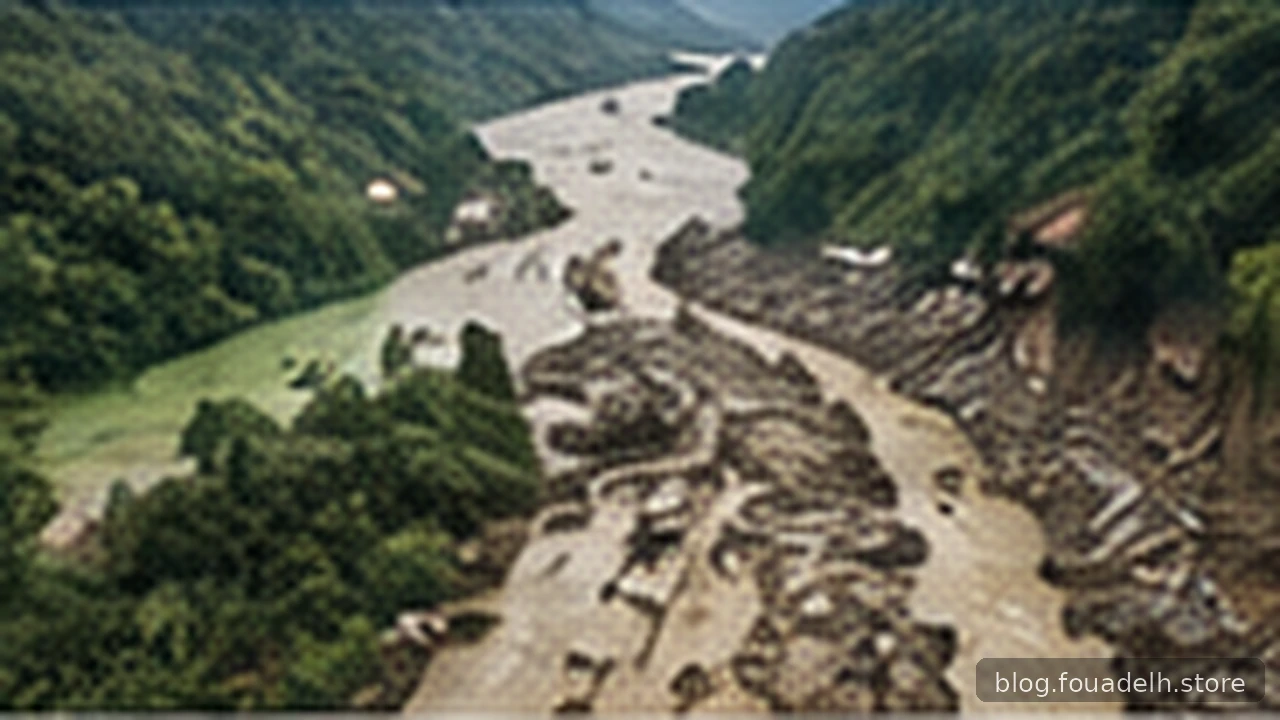
A debris-rich flood can move the channel, raise or lower the bed, fill settling structures and leave an apparently intact intake in a new hydraulic environment. This is a control problem as much as a descriptive one. For “Debris and sediment create long-tail risk”, keep the source, date, uncertainty and mechanism that connects the observation to service loss or human exposure. Then test the decision against a plausible failure of another dependency. This prevents a plan from working only in the ideal conditions that disappear during a mountain disaster. The reader job is to assess hydropower risk as a coupled system rather than as damage to isolated plants., and the result should be measurable against this outcome: Identify design, operations and portfolio controls that reduce cascading loss from future mountain hazards.
Restart should follow geomorphic and structural inspection rather than a simple visual check of the powerhouse. The operational implication is to connect evidence, trigger and ownership instead of adding another generic checklist. In “Debris and sediment create long-tail risk”, every important assumption should be visible, every threshold should have a rationale, and every failed exercise should create a specific corrective action. The review should also ask who becomes least protected when access or communications fail. That discipline supports the task to assess hydropower risk as a coupled system rather than as damage to isolated plants. and leads toward the intended outcome: Identify design, operations and portfolio controls that reduce cascading loss from future mountain hazards.
Commercial losses can continue through reduced output, accelerated turbine wear, dredging, access repairs and repeated shutdowns. A defensible decision then asks three questions: what is known, what could still change, and which action remains safe if the uncertainty resolves badly? “Debris and sediment create long-tail risk” should be revisited after material new evidence or terrain change. During the emergency, reversible precautions are often preferable; irreversible reconstruction or investment choices deserve a stronger evidence threshold. That approach serves the reader need to assess hydropower risk as a coupled system rather than as damage to isolated plants. and aims to identify design, operations and portfolio controls that reduce cascading loss from future mountain hazards.
Opened and read evidence: S4 · Reuters · S7 · Reuters Graphics · S11 · UNDRR
Tie shutdown rules to upstream signals
Waiting until a destructive surge reaches the intake leaves almost no operational control. In the context of “Tie shutdown rules to upstream signals”, the point matters only when it changes an operating decision. To assess hydropower risk as a coupled system rather than as damage to isolated plants., a team should identify the observable signal, who receives it, how quickly action must follow and what evidence will show that the control actually worked. A procedure that cannot be exercised under degraded access, power or communications should not be treated as proven readiness. The practical outcome remains: Identify design, operations and portfolio controls that reduce cascading loss from future mountain hazards.
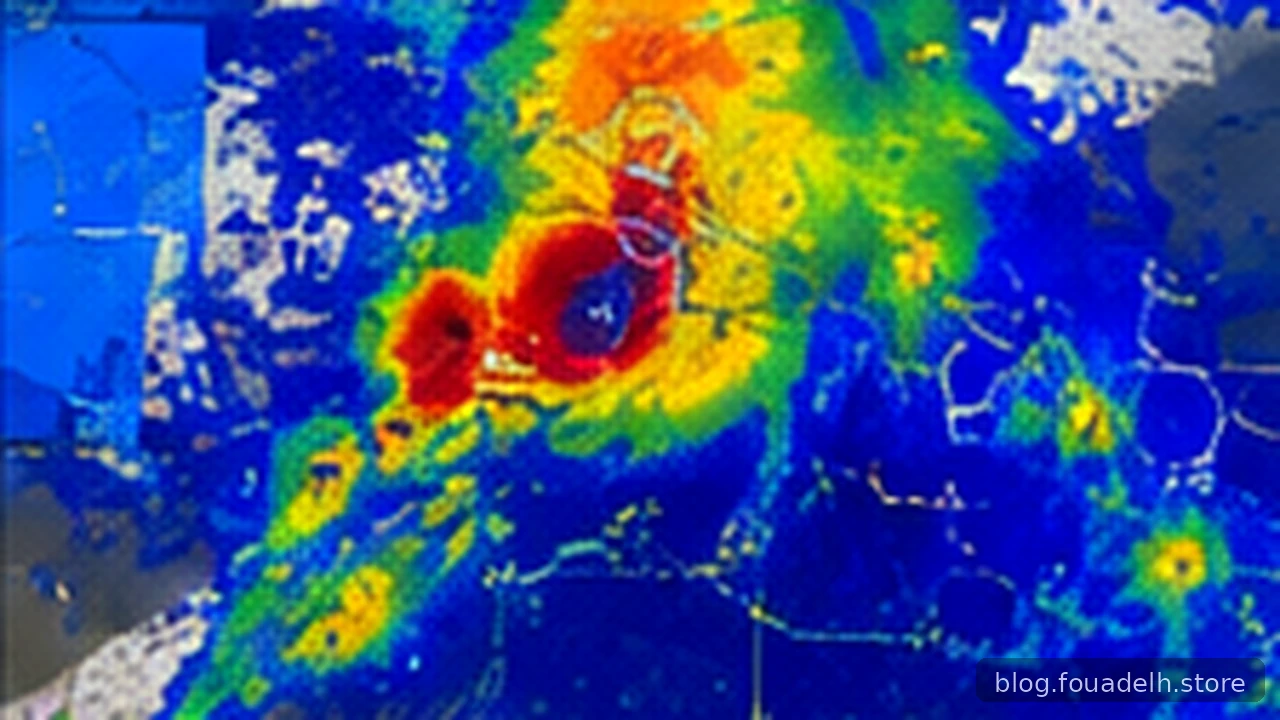
Upstream gauges, mass-movement detection, satellite observations, local observers and cross-border alerts can feed predefined operating states. This is a control problem as much as a descriptive one. For “Tie shutdown rules to upstream signals”, keep the source, date, uncertainty and mechanism that connects the observation to service loss or human exposure. Then test the decision against a plausible failure of another dependency. This prevents a plan from working only in the ideal conditions that disappear during a mountain disaster. The reader job is to assess hydropower risk as a coupled system rather than as damage to isolated plants., and the result should be measurable against this outcome: Identify design, operations and portfolio controls that reduce cascading loss from future mountain hazards.
The procedure must also explain what happens when SCADA or mobile communication disappears because the hazard itself can remove the authorization channel. The operational implication is to connect evidence, trigger and ownership instead of adding another generic checklist. In “Tie shutdown rules to upstream signals”, every important assumption should be visible, every threshold should have a rationale, and every failed exercise should create a specific corrective action. The review should also ask who becomes least protected when access or communications fail. That discipline supports the task to assess hydropower risk as a coupled system rather than as damage to isolated plants. and leads toward the intended outcome: Identify design, operations and portfolio controls that reduce cascading loss from future mountain hazards.
Opened and read evidence: S5 · Reuters · S8 · World Bank · S12 · ICIMOD
Move from plant resilience to grid resilience
When several projects in the same basin are affected together, single-unit reliability calculations understate the national risk. A defensible decision then asks three questions: what is known, what could still change, and which action remains safe if the uncertainty resolves badly? “Move from plant resilience to grid resilience” should be revisited after material new evidence or terrain change. During the emergency, reversible precautions are often preferable; irreversible reconstruction or investment choices deserve a stronger evidence threshold. That approach serves the reader need to assess hydropower risk as a coupled system rather than as damage to isolated plants. and aims to identify design, operations and portfolio controls that reduce cascading loss from future mountain hazards.
Geographic concentration creates correlated exposure to the same river process, road closure and transmission damage. In the context of “Move from plant resilience to grid resilience”, the point matters only when it changes an operating decision. To assess hydropower risk as a coupled system rather than as damage to isolated plants., a team should identify the observable signal, who receives it, how quickly action must follow and what evidence will show that the control actually worked. A procedure that cannot be exercised under degraded access, power or communications should not be treated as proven readiness. The practical outcome remains: Identify design, operations and portfolio controls that reduce cascading loss from future mountain hazards.
Distributed generation, storage, demand response and microgrids for critical services can reduce dependence on a cluster of mountain plants. This is a control problem as much as a descriptive one. For “Move from plant resilience to grid resilience”, keep the source, date, uncertainty and mechanism that connects the observation to service loss or human exposure. Then test the decision against a plausible failure of another dependency. This prevents a plan from working only in the ideal conditions that disappear during a mountain disaster. The reader job is to assess hydropower risk as a coupled system rather than as damage to isolated plants., and the result should be measurable against this outcome: Identify design, operations and portfolio controls that reduce cascading loss from future mountain hazards.
Opened and read evidence: S6 · Reuters · S9 · World Bank · S13 · ICIMOD
Recovery finance should buy risk reduction
The preliminary $4–5 billion reconstruction range creates pressure for rapid procurement, but permanent hydropower works should use updated hazard studies. The operational implication is to connect evidence, trigger and ownership instead of adding another generic checklist. In “Recovery finance should buy risk reduction”, every important assumption should be visible, every threshold should have a rationale, and every failed exercise should create a specific corrective action. The review should also ask who becomes least protected when access or communications fail. That discipline supports the task to assess hydropower risk as a coupled system rather than as damage to isolated plants. and leads toward the intended outcome: Identify design, operations and portfolio controls that reduce cascading loss from future mountain hazards.
Emergency restoration and permanent redesign should be funded as separate decisions so an old siting assumption is not locked in by urgency. A defensible decision then asks three questions: what is known, what could still change, and which action remains safe if the uncertainty resolves badly? “Recovery finance should buy risk reduction” should be revisited after material new evidence or terrain change. During the emergency, reversible precautions are often preferable; irreversible reconstruction or investment choices deserve a stronger evidence threshold. That approach serves the reader need to assess hydropower risk as a coupled system rather than as damage to isolated plants. and aims to identify design, operations and portfolio controls that reduce cascading loss from future mountain hazards.
Lenders and insurers can request independent hazard mapping, sediment plans, emergency exercises and business-continuity targets. In the context of “Recovery finance should buy risk reduction”, the point matters only when it changes an operating decision. To assess hydropower risk as a coupled system rather than as damage to isolated plants., a team should identify the observable signal, who receives it, how quickly action must follow and what evidence will show that the control actually worked. A procedure that cannot be exercised under degraded access, power or communications should not be treated as proven readiness. The practical outcome remains: Identify design, operations and portfolio controls that reduce cascading loss from future mountain hazards.
Opened and read evidence: S7 · Reuters Graphics · S10 · World Bank Blogs · S1 · Reuters
A practical resilience portfolio
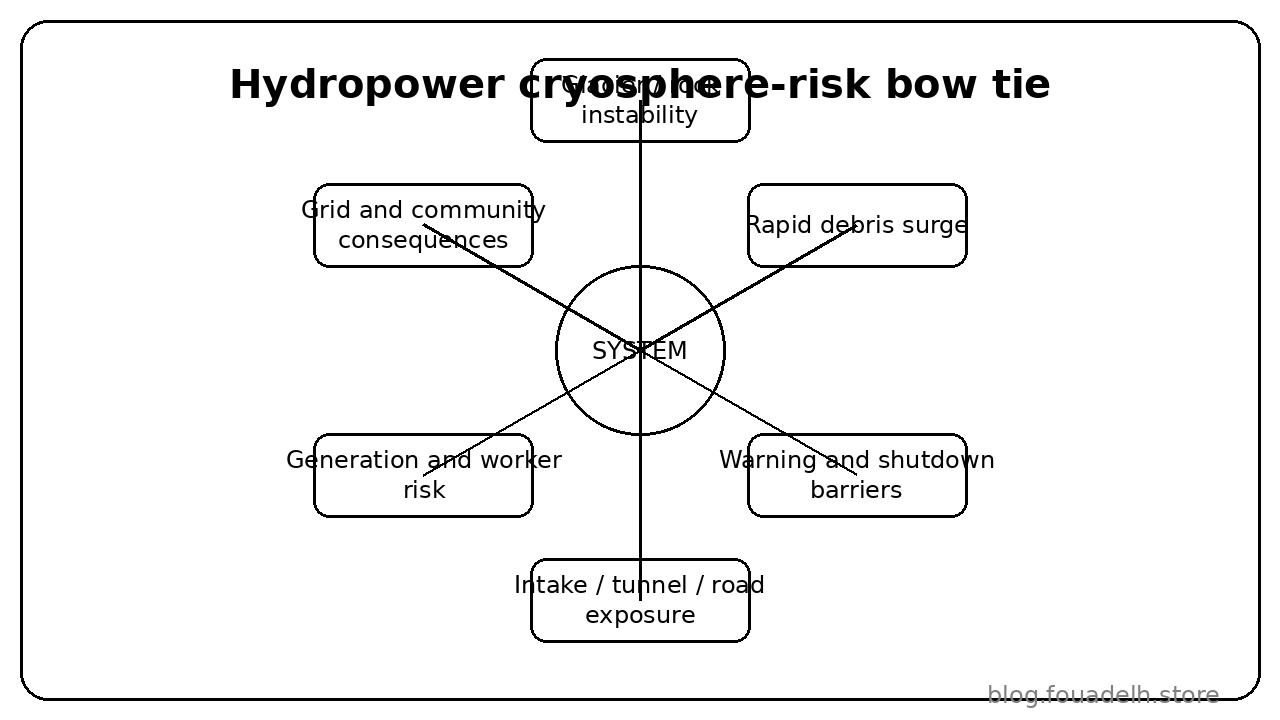
Plant-level priorities include upstream monitoring, safe shutdown states, independent communications, critical spares and post-flood geomorphic inspection. This is a control problem as much as a descriptive one. For “A practical resilience portfolio”, keep the source, date, uncertainty and mechanism that connects the observation to service loss or human exposure. Then test the decision against a plausible failure of another dependency. This prevents a plan from working only in the ideal conditions that disappear during a mountain disaster. The reader job is to assess hydropower risk as a coupled system rather than as damage to isolated plants., and the result should be measurable against this outcome: Identify design, operations and portfolio controls that reduce cascading loss from future mountain hazards.
Cascade-level priorities include shared warnings and common data so an upstream event is not rediscovered independently at each plant. The operational implication is to connect evidence, trigger and ownership instead of adding another generic checklist. In “A practical resilience portfolio”, every important assumption should be visible, every threshold should have a rationale, and every failed exercise should create a specific corrective action. The review should also ask who becomes least protected when access or communications fail. That discipline supports the task to assess hydropower risk as a coupled system rather than as damage to isolated plants. and leads toward the intended outcome: Identify design, operations and portfolio controls that reduce cascading loss from future mountain hazards.
National priorities include a common view of generation availability, grid flexibility, access and restoration sequencing. A defensible decision then asks three questions: what is known, what could still change, and which action remains safe if the uncertainty resolves badly? “A practical resilience portfolio” should be revisited after material new evidence or terrain change. During the emergency, reversible precautions are often preferable; irreversible reconstruction or investment choices deserve a stronger evidence threshold. That approach serves the reader need to assess hydropower risk as a coupled system rather than as damage to isolated plants. and aims to identify design, operations and portfolio controls that reduce cascading loss from future mountain hazards.
Opened and read evidence: S8 · World Bank · S11 · UNDRR · S2 · Reuters
Decision and verification checklist
Each control needs expected evidence and a defined action when the check fails. These items stay tied to the article’s reader job rather than a generic disaster template.
Map hazard sources upstream of the concession boundary. Measure safety or service outcome rather than administrative activity.
Treat intakes, tunnels, roads, substations and telecoms as one service chain. Assign an owner, due date and observable success evidence.
Keep tunnel personnel accounting independent of the public network. Retest after a material terrain, season or staffing change.
Inspect channel geometry and sediment before restart. If evidence is missing, preserve the uncertainty and choose a reversible precaution.
Use explicit operating states so commercial pressure does not delay shutdown. Measure safety or service outcome rather than administrative activity.
Design communications for degraded mode, not ideal conditions. Assign an owner, due date and observable success evidence.
Stress-test simultaneous outages across a basin. Retest after a material terrain, season or staffing change.
Give critical services power continuity that survives regional hydropower loss. If evidence is missing, preserve the uncertainty and choose a reversible precaution.
Separate emergency restoration from permanent reconstruction. Measure safety or service outcome rather than administrative activity.
Include sediment pulses and channel migration in financial models. Assign an owner, due date and observable success evidence.
Create cross-operator data-sharing rules for warnings and access. Retest after a material terrain, season or staffing change.
Measure resilience by safe service and recovery time, not installed megawatts. If evidence is missing, preserve the uncertainty and choose a reversible precaution.
Related campaign articles
- Tourism after the Nepal–Tibet flood: what operators, trekkers and consular teams should change
- حماية الأطفال بعد الفيضانات المفاجئة في نيبال: من الإيواء إلى التعليم والدعم النفسي


Comments
No published comment yet.
Sign in to comment